Remote Mandibular Advancement Device
(No In-Office Visit Required!)
Some obstructive sleep apnea sufferers are looking for a non-invasive (non-surgical) solution to control their sleep apnea symptoms and heavy snoring. Often, they are told to use CPAP (continuous positive airway pressure, also known as the “sleep mask” or “sleep machine”). But not everyone who needs treatment for sleep apnea can tolerate CPAP, or is willing to strap a mask to their face in order to get a good night’s sleep. CPAP can be uncomfortable, noisy, and is difficult to take with you if you travel.
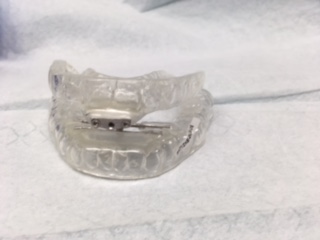
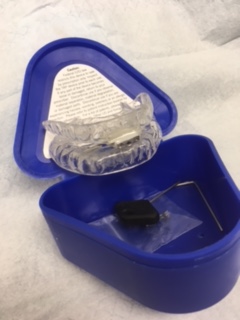
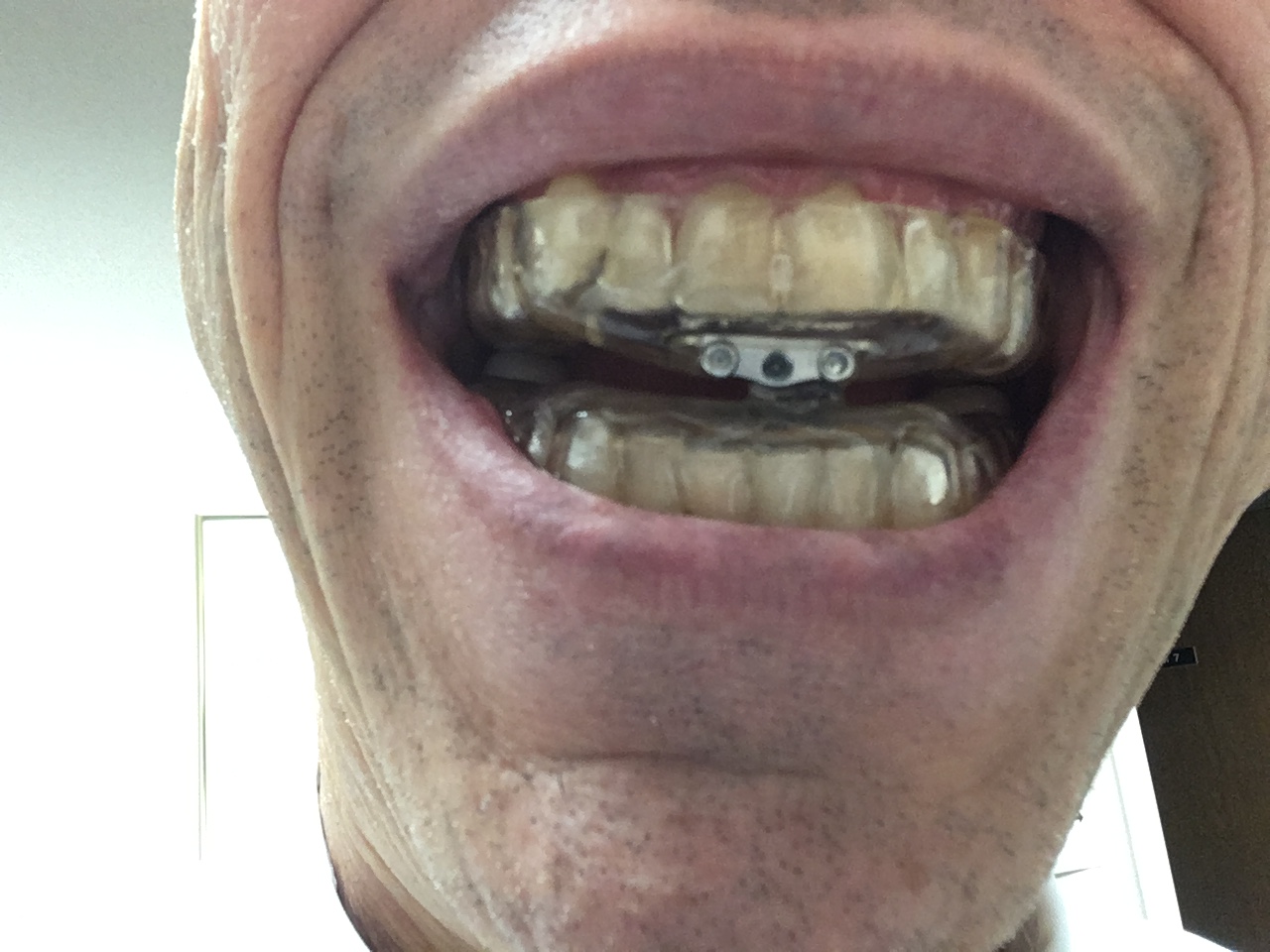
There is another solution. An oral appliance, known as a mandibular advancement device, can often help. It is a device that you put in your mouth before going to sleep, and you wear it all night long, like a retainer. It is custom-molded to fit on your upper and lower teeth, with an adjustable connector between the two parts. You can fine-tune the setting of the device until your snoring and sleep apnea reduces to an acceptable level. You can see an example of what one appliance looks like by checking the photos below. (There are other options that have a slightly different appearance).
Dr. Spingarn at Westchester ENT is now making these devices for sleep apnea sufferers. After an appropriate diagnostic evaluation and sleep testing has been performed, Dr. Spingarn will let you know if you are a good candidate for oral appliance therapy with a mandibular advancement device. If so, you have two options for getting an appliance. In the traditional method, Dr. Spingarn will take impressions of your teeth, which will be sent to a device-making laboratory, and then you will come back to the office to receive your device. If you live far away from the office, we are now offering a remote treatment option, where you take your own dental impressions (following instructions that come in a kit that will be sent to you at home) and receive your appliance in the mail. This option applies to patients insured by Cigna, Oxford, United Healthcare, and Empire Plan, as well as private-pay patients. In many cases, your health insurance coverage will pay for all or most of the cost of your treatment. With other commercial insurances, such as Aetna, you may have partial coverage. Blue Cross offers partial coverage if you have out-of-network benefits. Government-sponsored plans, such as Medicare and Medicaid, and union plans, such as Local 1199, do not cover these appliances in our office, but we do offer a self-pay option.
In order to use a mandibular advancement device, your teeth should be in good shape, with no dental decay or active dental problems. You also should have no history of jaw pain or the jaw-joint disorder known as temporomandibular dysfunction (often abbreviated as TMJ pain or TMD).
If you are interested in a remote oral appliance consultation, the first step would be a consultation with Dr. Spingarn. We highly recommend an in-person consultation, but if the distance or inconvenience is too great, a telehealth consultation is acceptable. To prepare for your consultation, if you already have a diagnosis of obstructive sleep apnea, you are welcome to email a copy of your sleep test results to Dr. Spingarn at info@WestchesterENT.net. If your sleep test was performed more than one year ago, you might need a new test, which we can order for you. If you do not have a sleep apnea diagnosis yet, call our office before your visit so we can arrange for a sleep test to be authorized by your insurance company.